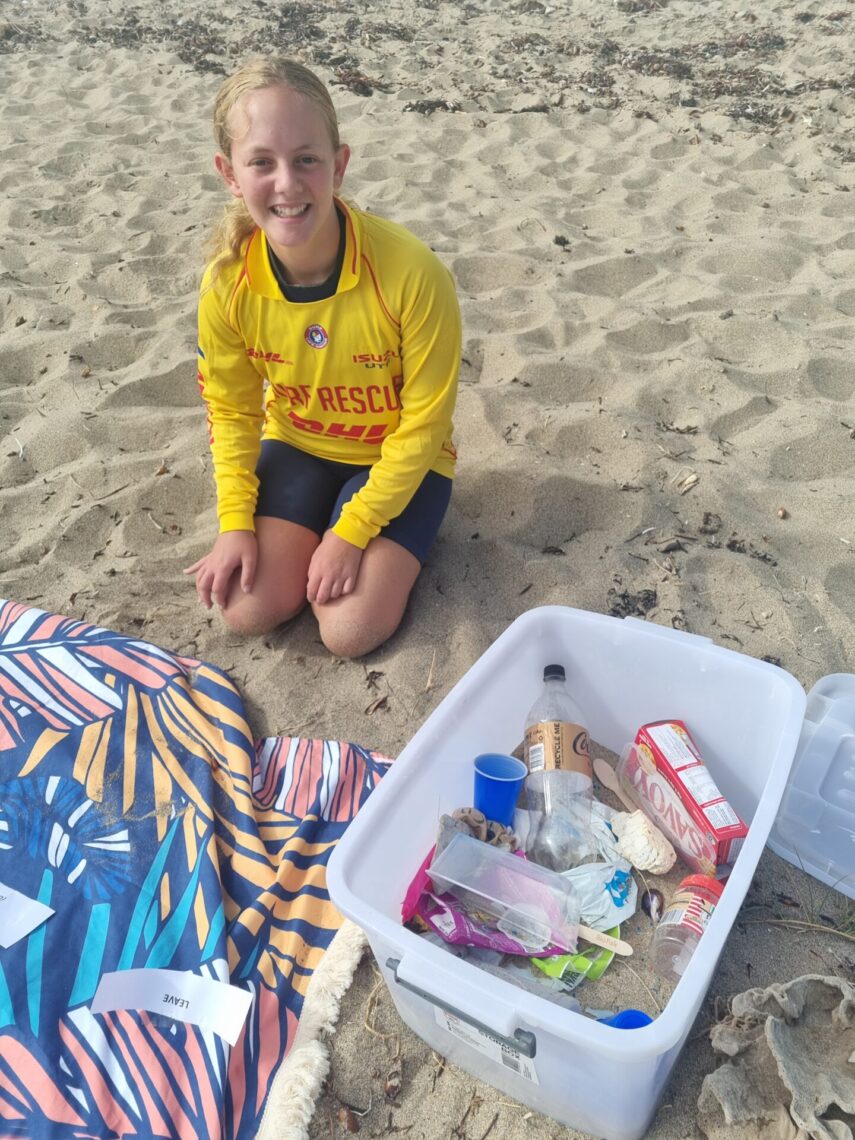
For many surf lifesavers, the beach is where childhood memories are made. It’s where nippers build confidence in the water, discover a love of the ocean and become part of a community that exists to protect others.
For today’s young members, it’s also where they’re watching the coastline change.
The beaches they love are increasingly being littered by plastic and rubbish, and they’ll be the generation that inherits them.
Australians produce 2.5 million tonnes of plastic waste each year, about 100kg per person. According to Clean Up Australia’s 2025 Litter Report, plastics make up more than 80% of all litter counted. More concerningly, around 130,000 tonnes of the plastic we consume contaminates the marine environment each year.
Rather than waiting for someone else to act, young surf lifesavers across the country are stepping forward, proving that protecting the coastline can be just as much a part of surf lifesaving as protecting the people who visit it.
Rose Fry is one of them.
A youth member at Beachport Surf Life Saving Club in South Australia, Rose was named National Youth Environmental Champion for Take 3 for the Sea after turning a simple beach clean-up into an ongoing environmental initiative embraced across her club. What began as a single clean-up day has grown into interactive nipper education sessions, annual community clean ups and a noticeable shift in how members think about caring for their local beach.
Shifting the Mindset, One Club at a Time
Ask Rose why she started, and the answer is simple.
“I always grew up near the beach, swimming since I was two months old, and I just saw it getting dirtier and dirtier.”
That was enough.
Rather than accepting the change, Rose decided to do something about it. What started as one community beach clean-up has become an annual event that brings together club members, families and the wider Beachport community.
The impact has reached far beyond the rubbish collected.
In the two years since Rose started, she has noticed a difference not only in the condition of the beach, but in the attitudes of the people around her. Nippers proudly tell her how much rubbish they’ve picked up before training.
“They get excited about it,” she said. It’s not every day you hear children excited about picking up rubbish, but that’s exactly the culture Rose is helping build.
What began with one young member and her mother, has encouraged an entire club to think differently about the role it can play in protecting the coastline.
For surf lifesaving clubs, it’s a reminder that protecting communities doesn’t begin and end in the water. Caring for the beaches, dunes and oceans that bring communities together is another way clubs can make a lasting difference.
Perhaps the most encouraging part is how achievable it all is.
Rose is quick to point out that clubs don’t need major funding, specialist equipment or months of planning to get started. Beachport’s annual clean-up is built on a simple idea: choose a date, invite the community, provide gloves and rubbish bags, and show up.
The local coffee shop donates coffee for volunteers. Residents spread the word. Rubbish is sorted, weighed and reported to Take 3 for the Sea, creating a tangible record of the community’s impact and helping to inform policymaking and waste management.
It’s proof that meaningful environmental action doesn’t have to start with a large-scale campaign. Sometimes it starts with one club deciding that protecting the coastline is simply another way of protecting the community.
Teaching Nippers to See What’s Really There
For Rose, inspiring the next generation is just as important as the clean-up itself.
Rather than delivering lectures, she uses games, quizzes and hands-on activities that help environmental messages stick. One of the favourites involves hiding rice through buckets of sand to demonstrate how difficult it is to remove microplastics once they enter the environment.
“You can be told all this is happening, but if you don’t see it, you won’t believe it.”
By making learning interactive, Rose is helping young members connect with something much bigger than litter. Every piece of rubbish left behind has the potential to become part of the ocean they swim in, the beaches they patrol and the marine life they share it with.
Her experience also highlights something equally important: some of the best ideas come from young people.
“Don’t forget about the younger people, because they’re the ones that are going to grow up with this issue.”
“They care more than people give them credit for.”
Those words are a reminder for every surf club. Young members aren’t simply the future of surf lifesaving—they’re already helping shape it. They bring fresh ideas, energy and a determination to protect the coastlines they will inherit.
The Ripple Effect
Rose’s annual clean-up continues to grow, with more members getting involved each year and more nippers learning how small actions can make a lasting difference, creating a new generation of surf lifesavers who see environmental stewardship as part of protecting the places they love.
And the numbers suggest that when communities show up like Beachport has, it matters. CSIRO research comparing coastal debris surveys from 2022–2024 against surveys from a decade earlier found a 39 per cent decrease in plastic waste around Australian coastal cities, with 16 per cent more locations recording no litter at all. Researchers attributed that improvement in part to community clean-up efforts and awareness campaigns — exactly the kind of work Rose has been doing at Beachport.
The proof is there. The model is simple. And the next generation is already on board.
Protecting our communities doesn’t begin and end in the water. It also means protecting the beaches, dunes and oceans that bring our communities together — and the wildlife that depends on them.
Every surf lifesaver has a beach they call home. The question isn’t whether one club can make a difference — Beachport already has. The question is what happens when every club does the same.