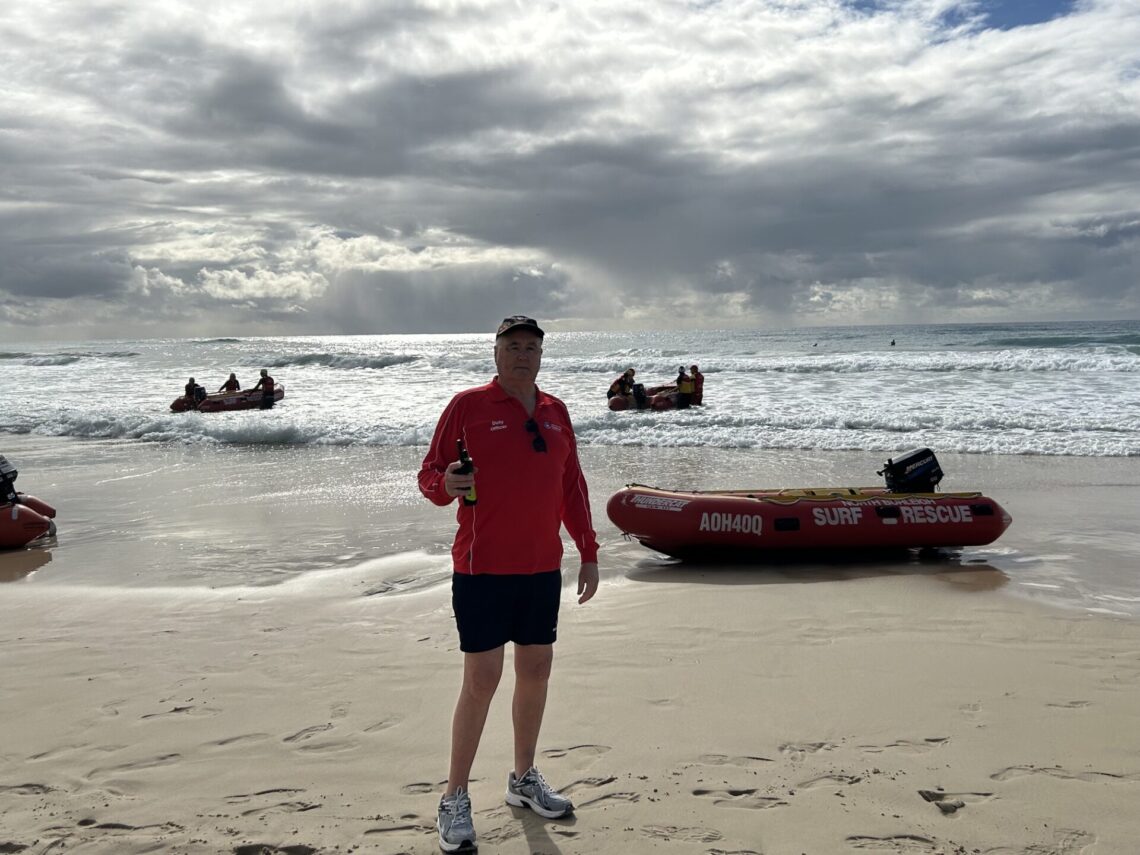
When Gary Patterson first joined Carrum Surf Life Saving Club in Victoria more than 40 years ago, he couldn’t have imagined where the journey would take him. From club leadership and regional operations in Victoria to supporting some of Queensland’s busiest beaches, his lifelong commitment to surf lifesaving has now been recognised with the 2026 Gold Coast Duty Officer of the Year award.
For Gary, however, the recognition isn’t about individual achievement.
“I feel extremely proud to receive the award,” he said. “But I was also surprised because there is a team of fantastic Duty Officers who are all deserving of the acknowledgement. We all bring different strengths, knowledge and experience, and you never stop learning from each other.”
Ironically, Gary wasn’t even present to accept the award. Instead, he was completing Incident Control Levels 1 and 2 training at Surf House, continuing to build the skills needed to coordinate major incidents and support frontline lifesavers.
A Journey Built on Leadership
Gary’s lifesaving journey began in the early 1980s at Carrum SLSC, where he progressed through numerous volunteer roles before serving as Club President for more than 13 years. During that time, he helped guide the club through its transition from Royal Life Saving to Surf Life Saving.
He also spent several years as a Regional Officer in Victoria, a position similar to Queensland’s Duty Officer role, before relocating north in 2010.
After arriving in Queensland, Gary joined Brisbane Lifesaving Service (BLS), attracted by the opportunity to support multiple clubs across the region. He later became part of Operations Support Services, earning his Rescue Water Craft qualification in 2013 before stepping into the Duty Officer role on the Gold Coast the following year.
More than a decade later, he’s still doing exactly what drew him to the position in the first place, supporting clubs, members and the wider community.
Behind the Scenes of a Duty Officer
While beachgoers often see the red and yellow uniforms on the sand, much of the coordination that keeps beaches running safely happens behind the scenes.
A Duty Officer’s day can begin up to 30 minutes before patrol starts and often doesn’t finish until well after the final patrol signs off, with shifts stretching to 12 hours during extended patrol periods.
Covering the entire Gold Coast from the Southport Spit to Rainbow Bay, Gary and his fellow Duty Officers continually monitor radio traffic, travel between clubs and remain ready to respond whenever additional support is required.
“The role can vary significantly depending on the circumstances,” Gary explained.
“One moment you might be speaking with members on patrol or talking with the public, and the next you’re coordinating resources during a major rescue or prolonged search.”
Duty Officers work closely alongside patrol teams, directing specialist resources such as Rescue Water Craft and the Westpac Lifesaver Rescue Helicopter when required, while also coordinating with SurfCom and other emergency services during significant incidents.
Even while visiting clubs or assisting on beach patrol, the responsibility never switches off.
“You never stop being a Duty Officer,” Gary said. “We’re always monitoring radio traffic and ready to respond if something happens.”
Supporting People When It Matters Most
Throughout the season, Gary helped respond to a wide variety of incidents, from mass rescues and missing swimmers to shark sightings and medical emergencies.
While Patrol Captains successfully managed many of these incidents, Duty Officers provided additional leadership, operational support and welfare assistance where required.
Looking back on the season, one of Gary’s proudest achievements wasn’t a major rescue, but helping develop the next generation of Duty Officers.
“I was fortunate to team up with a number of probationary Duty Officers throughout the season,” he said.
“It was fantastic getting to know their backgrounds, sharing my experience and supporting them as they learned the role.”
Just as memorable, he says, are the quieter moments spent visiting clubs, chatting with members and building relationships across the coast.
“There’s always plenty of banter between the Duty Officers,” he laughed.
Looking Beyond the Flags
For Gary, the Duty Officer role highlights just how much happens beyond the red and yellow flags.
Duty Officers provide critical leadership, operational support and incident coordination, ensuring clubs have the backup they need while working alongside agencies such as Queensland Police and other emergency services during complex incidents.
“We’re a vital part of the overall safety network,” Gary said. “We’re there to support our clubs, make critical decisions when required and help keep the community safe.”
For members considering taking the next step into Operations Support Services, Gary believes it’s an opportunity unlike any other.
“It gives lifesavers a broader perspective of how our services operate beyond the normal flagged area and how we work alongside other emergency services,” he said.
“If you’re interested, speak to someone in the Operations Support team. It’s a fantastic opportunity to grow your leadership skills, develop your incident management experience and make a real difference to beach and water safety.”