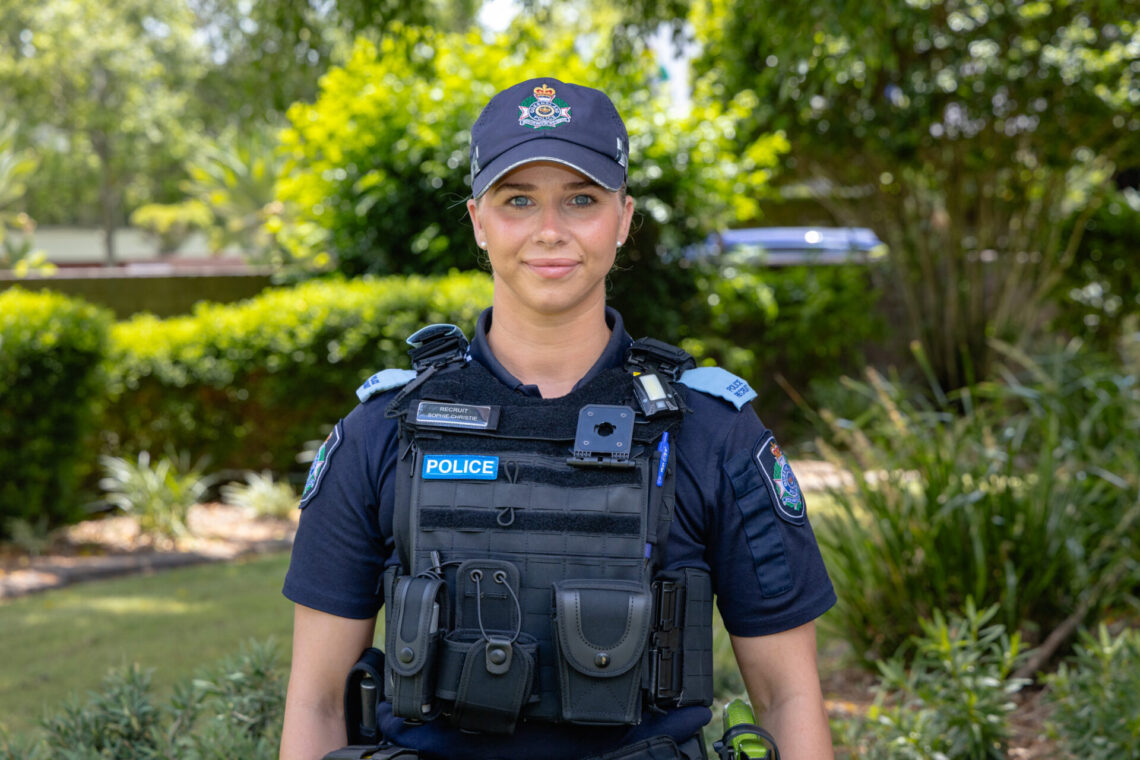
For current Surf Life Saving Queensland volunteer, Constable Sophie Christie, becoming a police officer wasn’t a sudden career change. It was the realisation of a dream that had been with her since childhood.
“Ever since I was a little girl, I wanted to be a police officer,” Constable Christie recalls. “I have a core memory of a female police officer coming to my primary school and talking about her job. Ever since then, I wanted to become an officer.”
Today, Constable Sophie Christie has turned that childhood ambition into reality as a Queensland Police Service (QPS) officer. Along the way, she has discovered that many of the skills she developed through Surf Life Saving have proven invaluable in her policing journey.
Building a Foundation Through Surf Life Saving
Constable Christie has been involved in Surf Life Saving Queensland for the past five years, a commitment that has shaped both her personal and professional development.
“Surf Life Saving has helped me enormously coming into the QPS because it has made me interact with all walks of life,” she says.
From communicating with beachgoers to working alongside fellow volunteers in challenging environments, Constable Christie credits lifesaving with helping her develop strong communication skills, confidence, teamwork and the ability to make quick decisions under pressure.
“I want to give back to the community and help wherever I can,” she says. “Working with people in Surf Life Saving definitely motivated me to join the QPS.”
For Constable Christie, many of the qualities developed through Surf Life Saving have translated naturally into policing, including teamwork, communication, quick decision-making and a strong commitment to helping others.
Lessons from the IRB
In recent years, Constable Christie has competed in Inflatable Rescue Boat (IRB) racing, an experience she believes has prepared her particularly well for policing.
“Racing has taught me the importance of teamwork,” she explains. “It makes you realise that you are a core part of a team and without teamwork it won’t work.”
An IRB crew relies on drivers, crewpersons and patients all working together in high-pressure scenarios where timing, communication and trust are critical.
“We have to trust that each person will do their job to complete the race,” says Constable Christie. “Each person plays a vital role.”
“I believe this has helped me coming into the QPS because you are part of a team here. We all need to work together but also have the ability to step up individually to make it work.”
Life at the Academy
For Constable Christie, academy life has been an opportunity to build on the skills she developed through Surf Life Saving while learning the practical and theoretical foundations of policing.
Throughout recruit training, she enjoyed working alongside a diverse cohort of recruits, drawing on the same teamwork and support that are central to both lifesaving and policing.
“We have formed lifelong friendships at the academy. We all have different strengths, and we have worked together to help each other through everything,” she says.
A self-confessed sports enthusiast, Constable Christie especially enjoyed the practical components of training, including time spent at the Bob Atkinson Operational Capabilities Centre (BAOCC).
“I loved going out to BAOCC and running the obstacle course,” she says. “We got to get hands-on and put everything we learnt in the theory phase into practice. It was great to learn new skills.”
For Constable Christie, the combination of classroom learning, practical training and working closely with fellow recruits has made academy life a rewarding introduction to a policing career.
Advice for Future Recruits
For Surf Life Saving members considering their next career move, Constable Christie is proof that the skills developed between the flags can provide a strong foundation for a career in the Queensland Police Service.
Importantly, pursuing a career in policing does not mean stepping away from Surf Life Saving. Constable Sophie Christie says the flexibility that comes with shift work can create opportunities to continue volunteering and staying connected to your local club. Whether it’s patrolling the beach, mentoring younger members or supporting club activities, many of the values that underpin Surf Life Saving, including service, teamwork and community involvement, can continue alongside a policing career.
From patrolling Queensland’s beaches to protecting Queensland communities, her journey demonstrates how a commitment to service, teamwork and helping others can create opportunities far beyond the surf.
Thinking of a Career with the Queensland Police Service?
For Surf Life Saving volunteers looking for their next challenge, a career with the Queensland Police Service could be a natural progression. The skills developed through lifesaving, including teamwork, communication, leadership, decision-making under pressure and a commitment to serving the community, are highly valued in policing.
A career with the Queensland Police Service is more than just a job. It is an opportunity to work in diverse roles, communities and locations across Queensland, enjoy the stability of a single employer and make a real difference in people’s lives every day.
If you’re ready to build on the experiences you’ve gained through Surf Life Saving and explore a rewarding career dedicated to helping others, visit www.policerecruit.qld.gov.au to learn more.