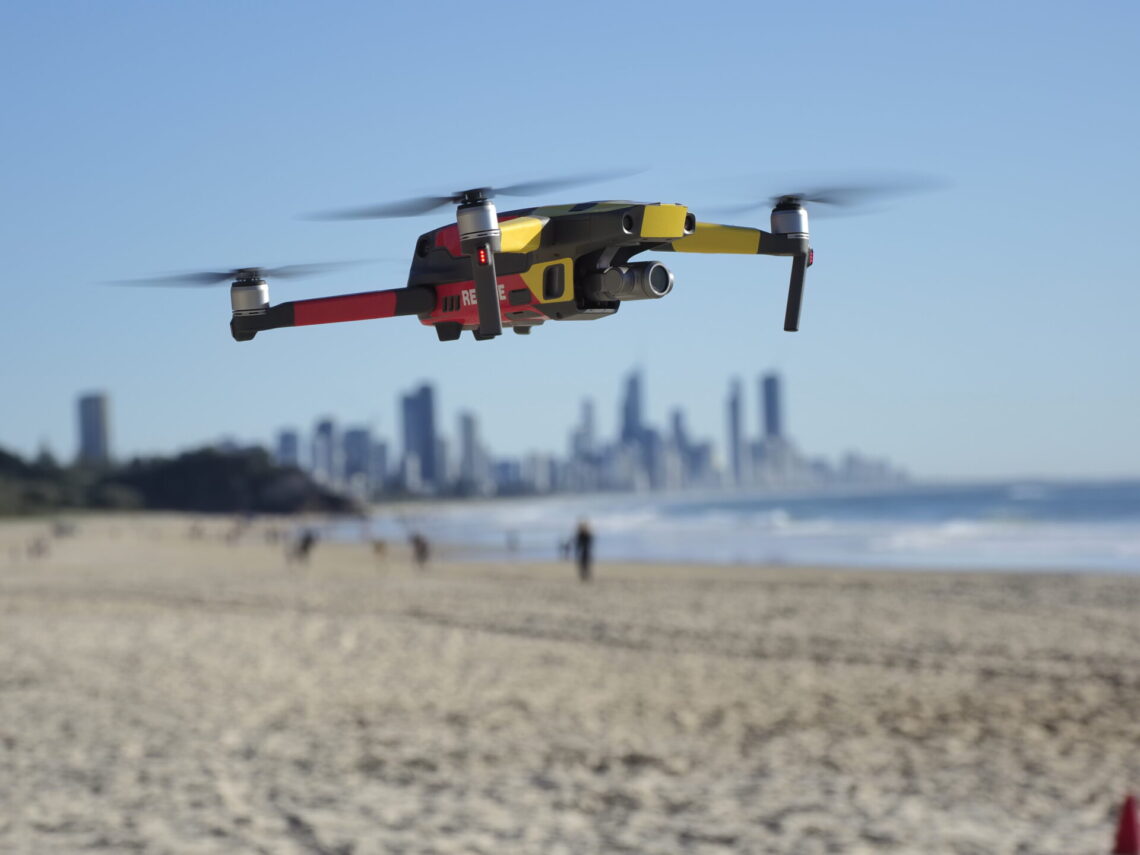
How responsible drone use helps protect Queensland’s lifesaving crews and the communities they serve.
From search and rescue missions to coastal surveillance and emergency response, Surf Life Saving Queensland’s aviation teams are ready to respond at a moment’s notice. Whether it’s the iconic Westpac Lifesaver Rescue Helicopter or the growing fleet of remotely piloted aircraft (RPAS), every mission relies on one thing before it can begin: safe, clear airspace.
While many people associate emergency response with what happens on the beach or in the water, an equally important responsibility exists above it.
One Aviation Team
The Westpac Lifesaver Rescue Helicopter operates around the clock across Queensland’s coastlines and waterways, regularly flying at low altitudes, often as low as 200 feet above ground level (AGL), to search for missing people, conduct winch rescues, assess hazards and support emergency services.
Working alongside the helicopter is Surf Life Saving Queensland’s Uncrewed Aviation Program. Using CASA-authorised remotely piloted aircraft (RPAS), the team provides valuable aerial intelligence to support searches, monitor incidents and assist operational decision-making, helping crews respond as quickly and safely as possible.
These operations don’t happen independently. Every deployment is carefully coordinated through the State Operations Coordination Centre (SOCC), allowing both crewed and uncrewed aircraft to work together as one integrated aviation team.
When Every Second Counts
While drones have become increasingly popular for photography and recreation, an unauthorised drone near an emergency scene can quickly become more than just an inconvenience.
Head of Uncrewed Aviation, Damien Boyer, says even a single recreational drone can have serious consequences.
“When an unauthorised drone enters the airspace during an emergency, it creates a significant safety risk for everyone involved,” he said.
“Our rescue helicopter and emergency drone crews are often operating at low level, in challenging environments and sometimes under immense time pressure where every second counts.”
If a recreational drone is spotted near an incident, emergency aircraft may be forced to alter their flight path, delay critical operations or even suspend flying until the airspace is confirmed safe.
“That delay can have real consequences when responding to incidents where lives are at risk,” Damien said.
Trained to Operate Safely
Every Surf Life Saving Queensland RPAS pilot is licensed and authorised by the Civil Aviation Safety Authority (CASA) to operate in complex emergency environments.
Alongside ongoing training and competency assessments, pilots follow strict operational procedures that allow them to work safely alongside crewed aircraft during emergency responses.
This coordinated approach ensures lifesaving resources can operate efficiently while maintaining the highest safety standards for crews and the community.
Everyone Has a Role to Play
For recreational drone operators, keeping Queensland’s skies safe starts with understanding when not to fly.
“If you see emergency services operating, the safest thing you can do is keep your drone on the ground,” Damien said.
“Whether it’s a rescue helicopter, emergency service aircraft or an authorised emergency drone, they have priority access to the airspace and need to be able to operate without distraction or conflict.”
Flying a drone around an emergency scene, including using it to film emergency responders, can be illegal and may interfere with lifesaving activities.
Before every flight, drone operators should ensure they are flying legally, remain well clear of emergency operations and always comply with CASA’s drone safety rules.
Damien says the message is simple.
“If emergency aircraft or emergency services are operating, don’t fly your drone.”
“It’s a simple decision that protects emergency crews, supports lifesaving operations and could ultimately save someone’s life.”
Sharing the Skies
As technology continues to evolve, crewed and uncrewed aircraft are playing an increasingly important role in protecting Queensland’s coastline.
By understanding the rules, respecting emergency operations and making informed decisions before taking flight, recreational drone operators become part of the wider safety network that helps lifesaving crews do what they do best.
Because when every second matters, keeping the skies clear can make all the difference.